What Famous Final Choices Teach Us About Advance Care Planning

7 min read
Fame doesn't buy you out of dying. It doesn't buy you out of the hard choices before it, either.
What it does do is put those choices in public. And every once in a while, a well-known person or their family tells us exactly what they decided, and why. Those moments teach more than any brochure I could hand you.
Every story below is documented in the public record, with sources at the end. No made-up quotes. No guessing about what someone "probably" believed.
Choosing comfort, out loud
Jimmy Carter. In February 2023, after a series of short hospital stays, the former president chose to spend his remaining time at home with his family and receive hospice care instead of more medical treatment. His family and his medical team backed him fully.
Then he kept living. Almost two years. He died at home in December 2024, at 100. A year in, his family said they were glad his decision had started so many family conversations across the country.
Here's the lesson most people miss. Hospice isn't giving up, and it isn't a countdown. It's a choice about how you want to live the time you have.
Rosalynn Carter. In May 2023, the Carter family shared that the former first lady had dementia. In November, she entered hospice care at home, beside her husband of 77 years. She died two days later, with family at her side.
She spent decades fighting for caregivers. She founded the Rosalynn Carter Institute for Caregivers. And at the end, her family made it possible for her to be cared for at home, in the house she'd lived in since the 1960s.
Barbara Bush. In April 2018, after several hospital stays, her family's spokesman announced that the former first lady, 92, had decided not to seek more medical treatment and would focus on comfort care. The decision came after talking it through with her family and her doctors. She died two days later.
Notice the order. She talked to her family. She talked to her doctors. Then she decided. Nobody had to guess.
John McCain. In August 2018, about a year after his diagnosis with an aggressive brain cancer, the Arizona senator's family announced he had chosen to stop medical treatment. He was at his Arizona ranch with his family. He died the next day.
His family's statement said he made that choice with his usual strength of will. It was his decision. They announced it. That's exactly the right order.
When nobody wrote it down
Terri Schiavo. She wasn't famous until her case made her famous. In 1990, at 26, she collapsed at home from cardiac arrest and suffered severe brain damage. She was healthy, working, ordinary. Like most 26-year-olds, she had no living will and had never named anyone to speak for her.
What followed was a seven-year legal war between her husband and her parents over her feeding tube. Her husband said she'd told him she would never want to be kept alive that way. Her parents disagreed. Because she left nothing in writing, Florida law gave her husband the say. Her parents fought it in court, again and again. The state legislature got involved. So did Congress. So did the President.
The tube came out and went back in more than once. She died in 2005, 15 years after she collapsed.
I'm not going to tell you who was right. That's not the lesson. The lesson is that a family who loved her tore itself apart in public, for years, over a question she could have answered on one page.
She was 26. If you're old enough to drive, you're old enough to write it down.
When dementia is in the house
Bruce Willis. In 2022, his family announced he had aphasia and was stepping away from acting. In 2023, they shared a more specific diagnosis: frontotemporal dementia. The statement was signed by everyone. His wife Emma, his ex-wife Demi Moore, and all five of his daughters.
That detail matters. A blended family, standing in one place, saying one thing. That doesn't happen by accident.
Since then, Emma Heming Willis has talked openly about what caregiving costs. In 2025 she shared that the family had made the hard decision to move him into a second home with round-the-clock caregivers, a place the whole family treats as home too. She has said it was one of the hardest calls she's ever made, and that she believed it was what he would want for their daughters.
"What he would want." There it is again. That phrase is the whole job.
Gene Hackman. This one is hard to write, and I'm going to be careful with it.
In February 2025, the actor and his wife, Betsy Arakawa, were found dead in their Santa Fe home. New Mexico's chief medical investigator later reported that Arakawa likely died first, around February 11, from a rare virus. Hackman, 95, had advanced Alzheimer's disease. He died about a week later, of heart disease. The investigator said it was quite possible he never knew his wife had died.
I don't know what plans they had, and I won't guess. But I know what this story says to every caregiver reading it, because I've been a caregiver.
Who takes over if you go down? Not someday. This week. If you got sick tonight and couldn't get up, who would know? Who has a key? Who checks in if they don't hear from you? Who knows your person's medications, doctors, and routine?
If the answer is nobody, that's the plan you need first.
What this means for you
Look at the difference between these stories.
The Carters, Barbara Bush, and John McCain made their choices themselves, talked them through with family and doctors, and their families carried those choices out. Nobody fought. Nobody guessed.
Terri Schiavo's family had to guess. Fifteen years of it.
The Willis family keeps coming back to one question: what would he want? And the Hackman story asks the one almost nobody plans for: what happens if the caregiver goes first?
You don't need a spokesman or a press release. You need four things:
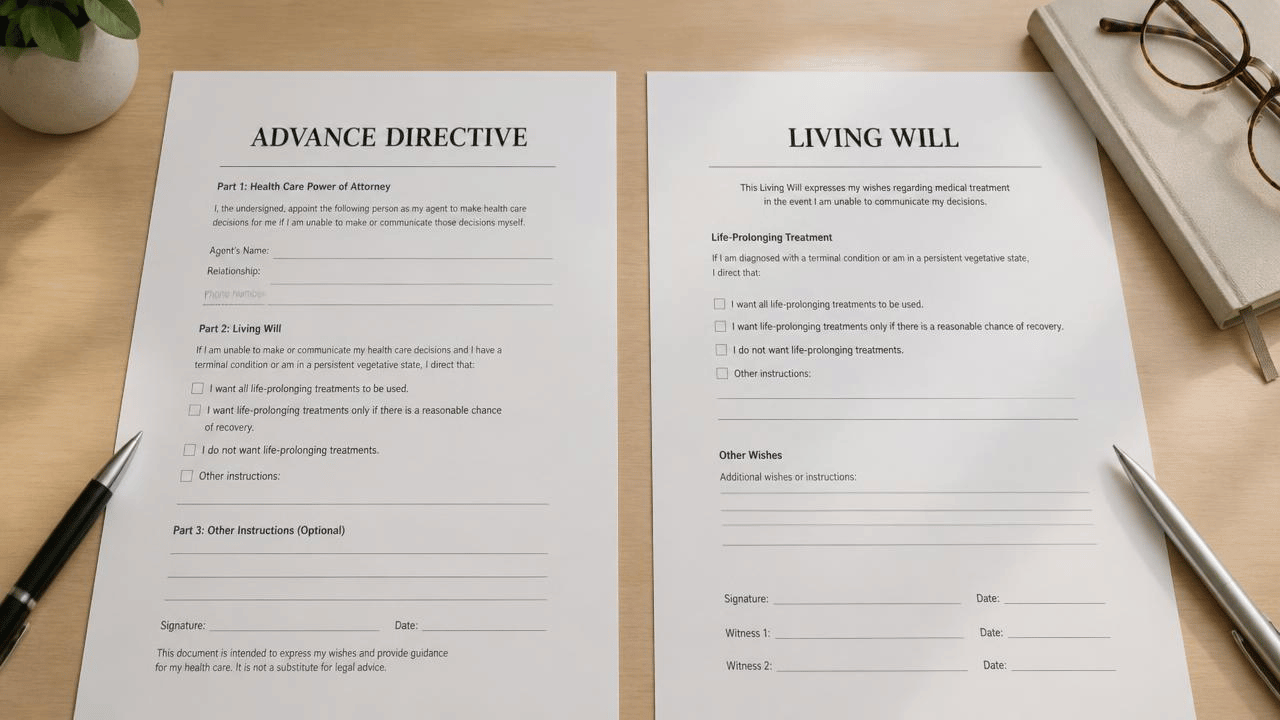
- A person. Name who speaks for you in a health care power of attorney.
- Your wishes, in writing. A living will that says what you want and don't want.
- The conversation. Tell your person what matters to you, out loud, before anything happens.
- A backup plan. If you're a caregiver, write down who steps in if you can't.
Let's do it together
I'm not an attorney, and this isn't legal advice. What I do is help people get their wishes figured out, written down, and into the right hands, while there's still time to do it calmly.
If you're ready, book a Guided Planning Session. If you're not ready to talk yet, start with the free Emergency Care Kit. It puts the medical information first responders need in one place, so nobody is guessing when it matters.
Sources
- Jimmy Carter enters home hospice care (American Press / AP, Feb. 2023)
- A year after Jimmy Carter entered hospice care (NBC Miami, 2024)
- Rosalynn Carter enters hospice care at home (CNBC, Nov. 2023)
- Barbara Bush to end medical treatment, focus on comfort care (ITV, Apr. 2018)
- John McCain's family says he's stopping medical treatment (PBS NewsHour / AP, Aug. 2018)
- Terri Schiavo dies, 13 days after removal of feeding tube (9News / AP, 2005)
- Bruce Willis' wife marks his birthday with message about grief (ABC7 / CNN, Mar. 2023)
- Emma Heming Willis shares update on Bruce Willis' health (ABC11, 2025)
- Timeline of Gene Hackman and Betsy Arakawa's deaths (TODAY, 2025)
I'm Jennifer Michaels, CDP®, founder of GuideWyze. I learned most of this the hard way. Now I help families do it with a little less guesswork.